
REWILDING THE SADO ESTUARY SEASCAPE:
COMMUNITY-LED OYSTER BANK AND SEAGRASS
MEADOW CO-RESTORATION
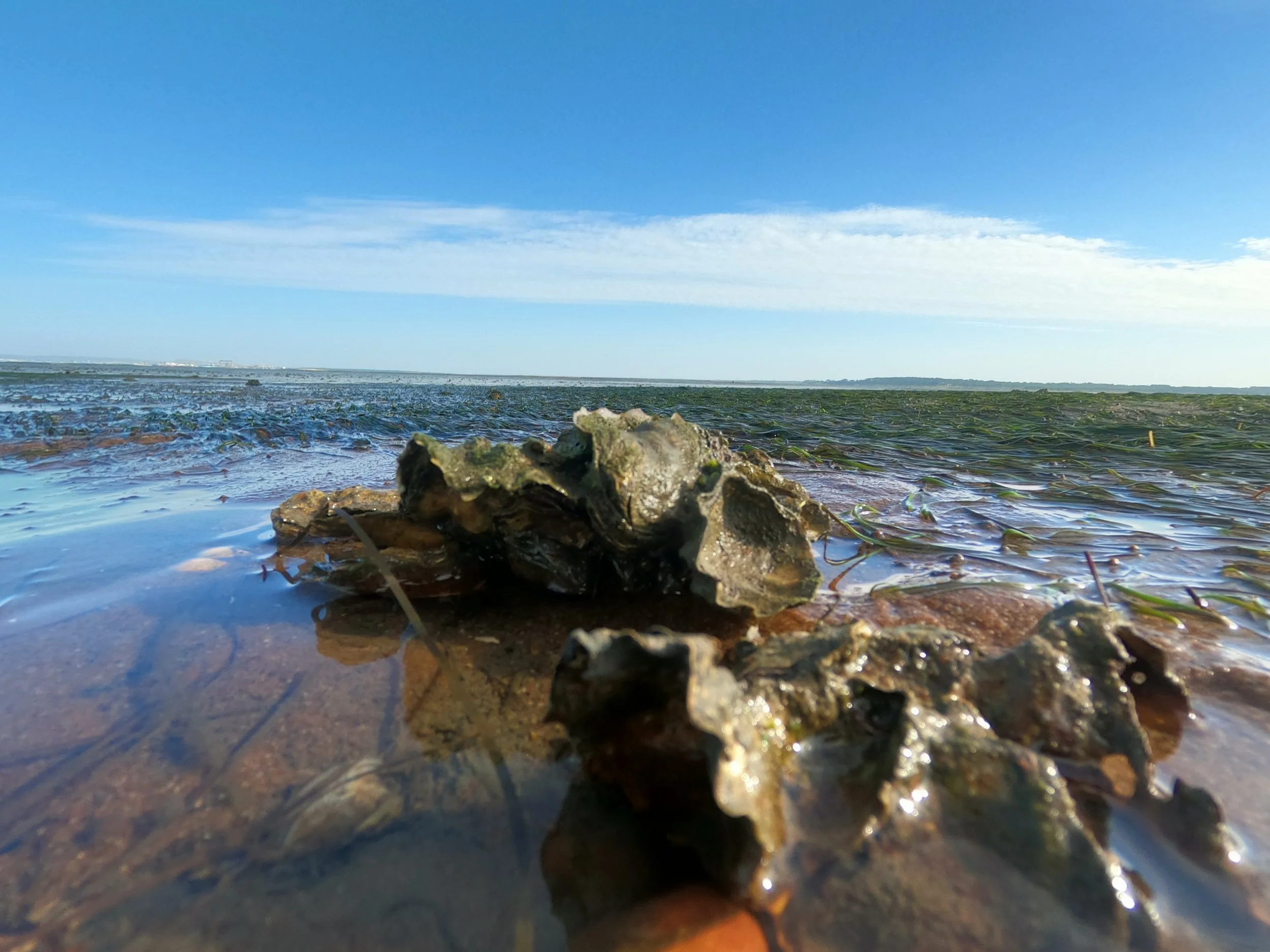
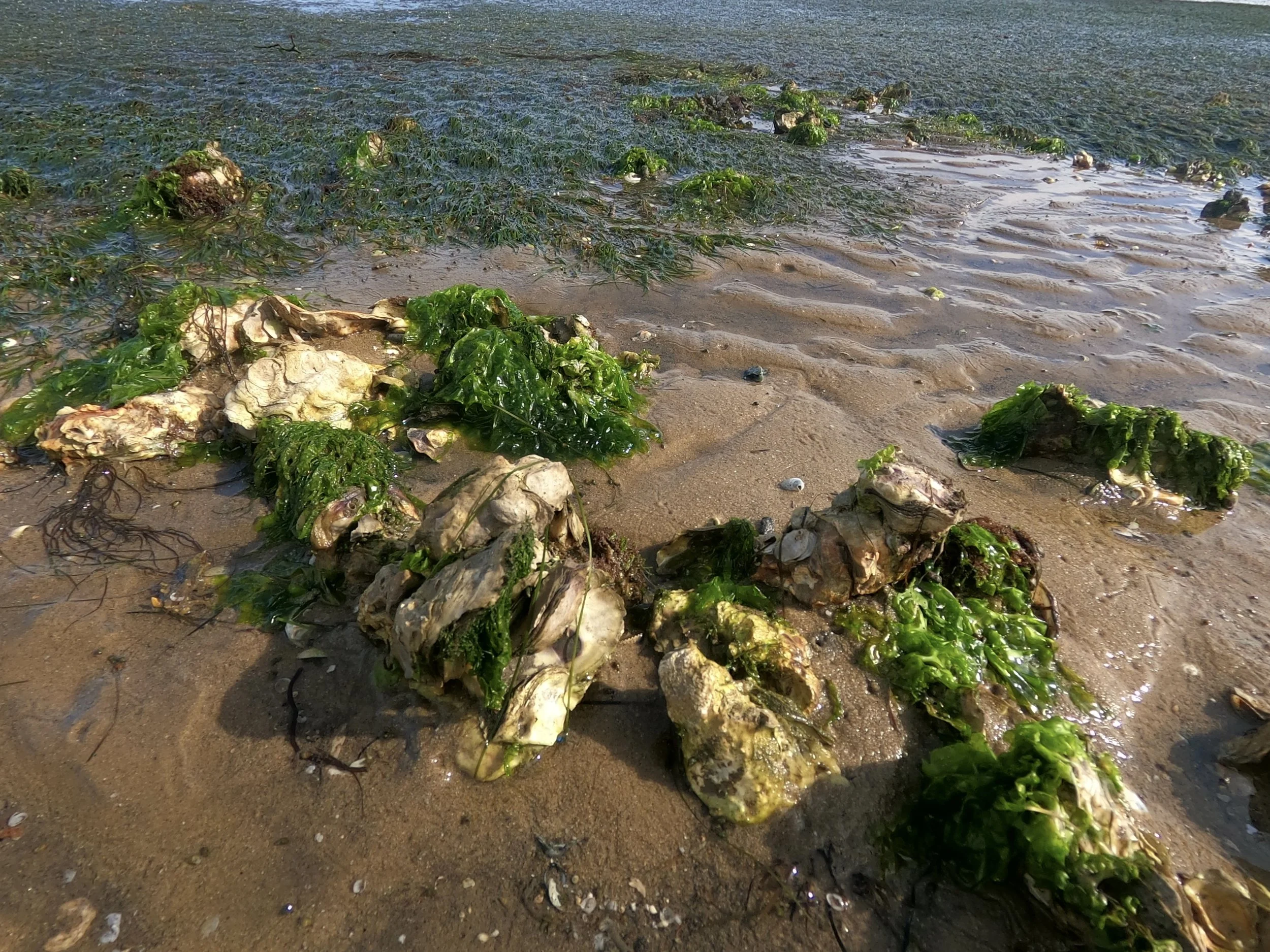

©Ocean Alive
Community led co-restoration of an oyster bank and seagrass meadow
BEGINNING: FEBRUARY 2026
END: ONGOING
This project addresses the loss of key marine habitats, the resulting impairment of ecological connectivity and resilience of the seascapes, crucial for the marine ecosystem services from which all forms of life benefit. The project is designed to restore a seagrass meadow and a natural oyster bank using a co-restoration approach and engaging the local community.
The pilot site of the project, Vale de Éguas, is located within the Sado Estuary Site (code PTCON0011) under the EU Natura 2000 network, within the Natural Reserve of the Sado Estuary (RNES), and within the fishing area of the local communities. This area has key conditions for a community-led co-restoration approach (1). Shellfish harvesting for clams, causing seagrass degradation, stoped in 2019. Since then, the existing patchy seagrass meadow has naturally expanded to a continuous meadow with 3.4 ha. Nearby, a natural functional oyster bank is also developing (2). By improving the oyster bank, seagrass will benefit with reduced hydrodinamism and cleaner water to thrive.
To restore balance, a community-led oyster bank and seagrass co-restoration initiative will be implemented.
Goals:
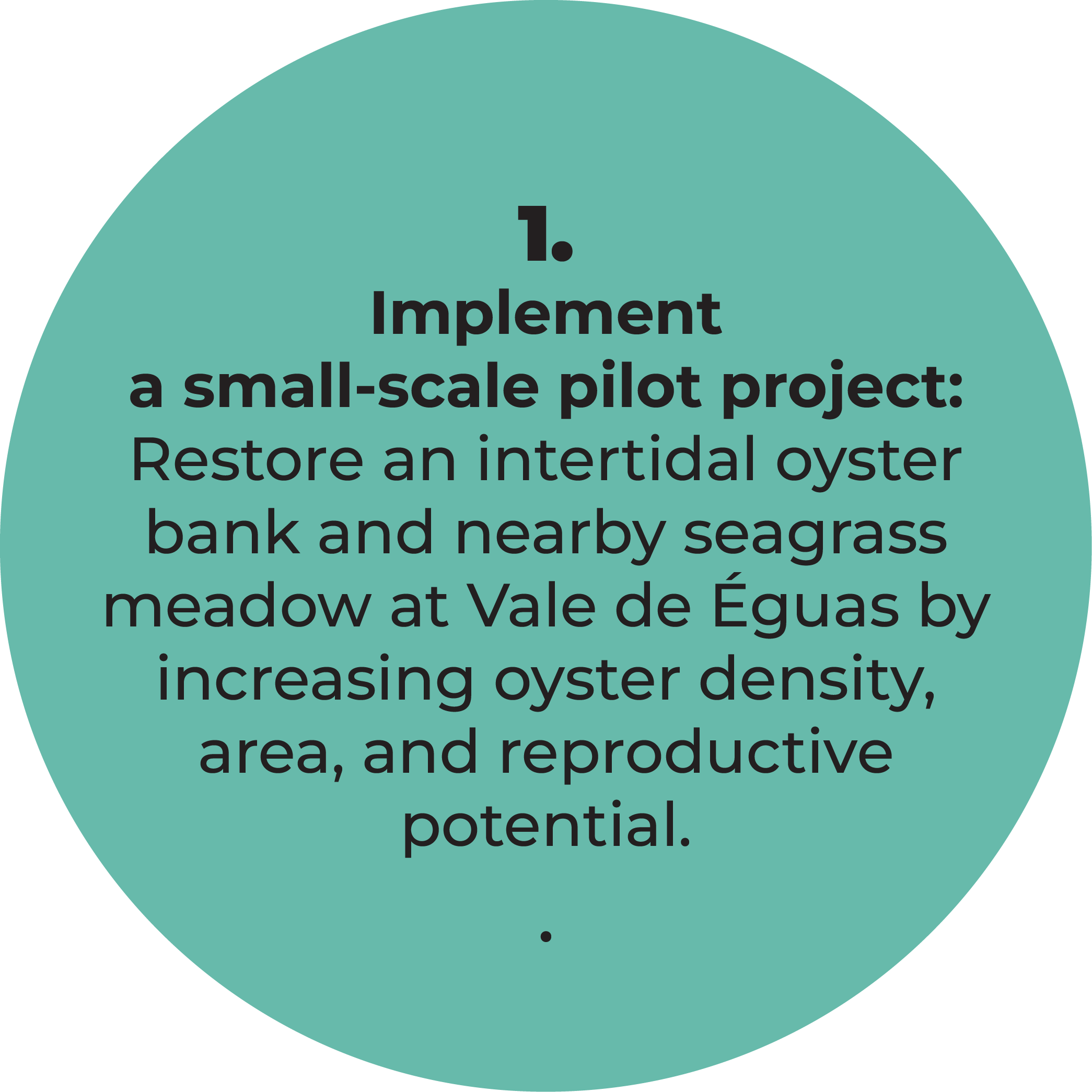
1) Develop the technical and scientific expertise necessary to implement the first pilot of native oyster and seagrass co-restoration in the Sado estuary, with scalability and potential for replication in other Portuguese estuaries facing similar challenges.
2) Implement the first pilot of native oyster and seagrass co-restoration in the Sado estuary.
3) Assure the long-term sustainability of this initiative, through the creation of a community catalyzed co-restoration solution.
FUNDING:
An Ocean Alive’s initiative in partnership with Patagonia and European Maritime and Safety Agency.


PARTNERSHIPS:
This initiative is carried out in scientific partnership with MARE - Centre for Marine and Environmental Sciences, and Neptun Pearl, a sustainable oyster aquaculture in the Sado Estuary.
It also benefits from the support of ICNF - the Institute for Nature Conservation and Forests, RNES - the Sado Estuary Natural Reserve, the Comporta Parish Council, the Setúbal and Sesimbra Port Administration and the Association of the Fishing Community of Carrasqueira.


ADVISORY:
Seawilding - a community- led native oyster and seagrass restoration project in Loch Craignish has an advisory role in the project.


References
1. Gamble, C., Glover, A., Debney, A., Bertelli, C., Green, B., Hendy, I., ... & Preston, J. (2021). Seagrass Restoration Handbook: UK and Ireland. Zoological Society of London https://doi.org/10.1007/s10750-023-05183-5; 2. Portela, T. P. M. (2016). Distribuição e recrutamento da ostra-portuguesa, Crassostrea angulata (Lamarck, 1819), no estuário do Sado (Doctoral dissertation).